Designing Emotional Intelligence: Building an AI-Driven Journaling Experience That Connects Mind and Body.

Product Design, Branding, Research, Product Management
Tools
DATE
November 11, 2024

My Role

  • Led product design for journaling, insights, and engagement systems
  • Designed AI-assisted reflection flows and feedback loops
  • Defined behavioral mechanics (e.g., streaks, prompts, progress tracking)
  • Collaborated with engineering on real-time processing and data visualization

The Challenge

Journaling products often fail not because people don’t see value but because they don’t stay consistent.

Key challenges included:

  • Reducing the friction of starting and maintaining journaling habits
  • Designing AI that enhances reflection without feeling intrusive
  • Balancing open-ended expression with structured guidance
  • Competing with digital distractions in users’ daily routines
  • Making insights feel personal, not generic

A major factor was addressing how modern digital environments reduce attention spans, making consistency difficult without thoughtful engagement design.

Approach: Focus on the “How”

1. Behavior-Driven Engagement System (Streaks & Consistency)

To counter inconsistency and distraction:

  • Designed a streak system tied to meaningful engagement, not just app opens
  • Framed streaks as self-investment, not pressure-based gamification
  • Integrated gentle recovery mechanics to avoid discouragement after breaks

Key Insight:
Users disengage when they feel they’ve “failed.”
So the system was designed to encourage continuity, not punish gaps.

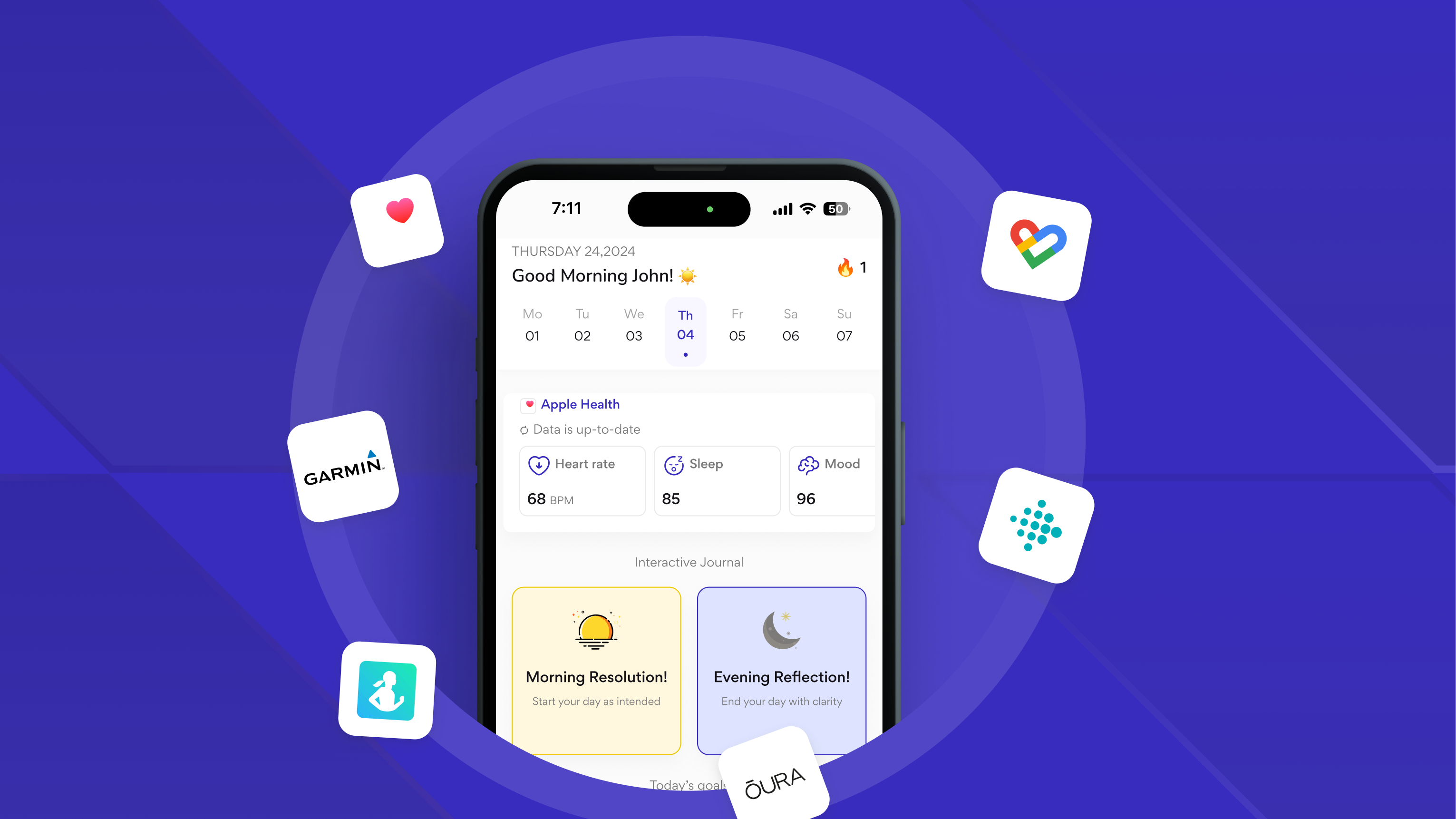
The Landing page of the Redesign

2. AI-Assisted Journaling Flow

I structured how AI interacts with user input to enhance reflection:

  • Designed flows for prompt → user input → AI follow-up → deeper reflection
  • Enabled context-aware prompts based on prior entries
  • Ensured AI responses felt supportive, not prescriptive

UX Goal:
Make AI feel like a thought partner, not an authority.

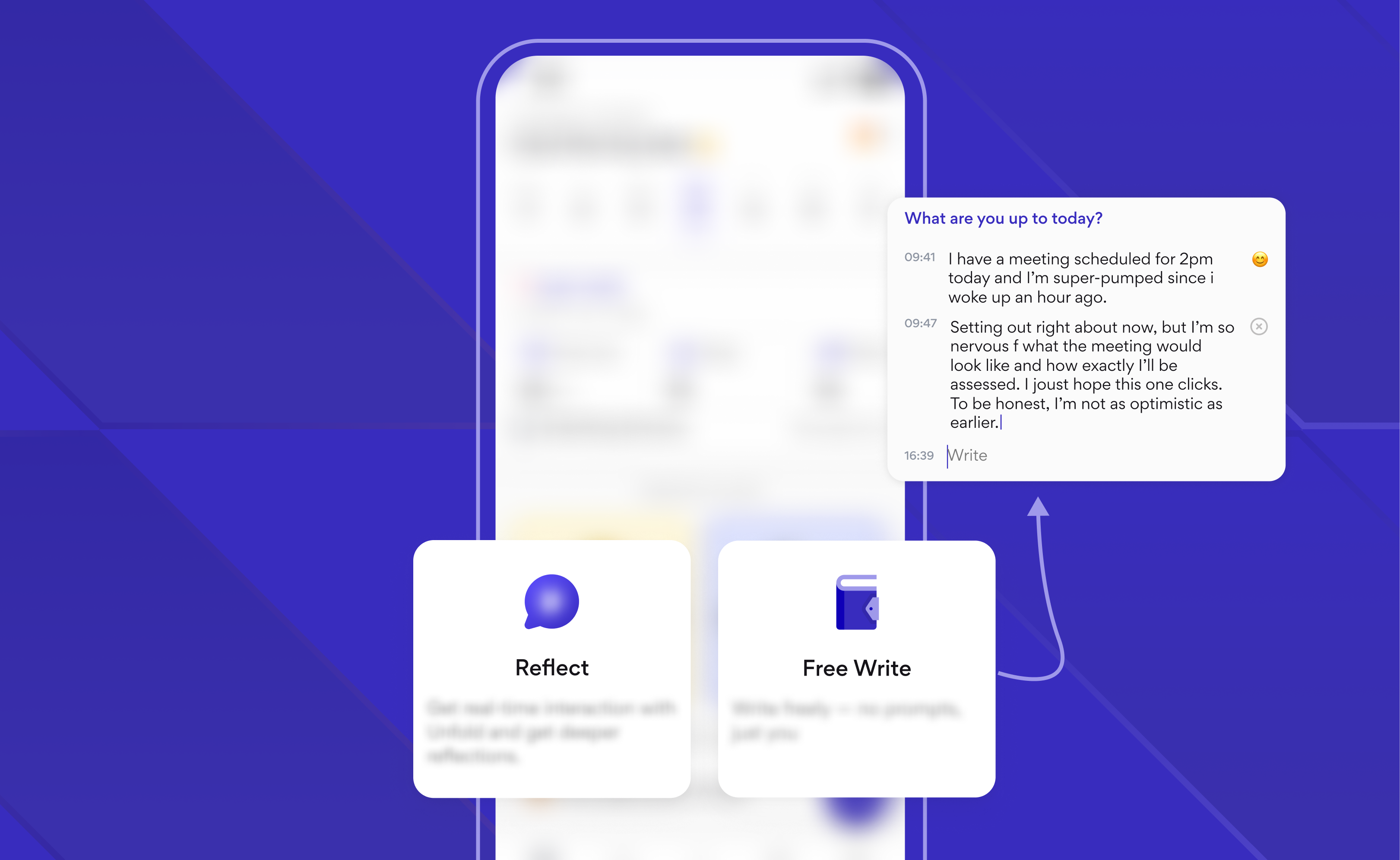
3. Reducing Entry Friction

Starting is the hardest part of journaling.

To solve this:

  • Introduced quick-start entry points (mood-based, prompt-based, free-write)
  • Minimized decision fatigue through guided entry options
  • Designed for low-effort input that can expand progressively

Outcome:
Users could start journaling in seconds instead of overthinking the process.

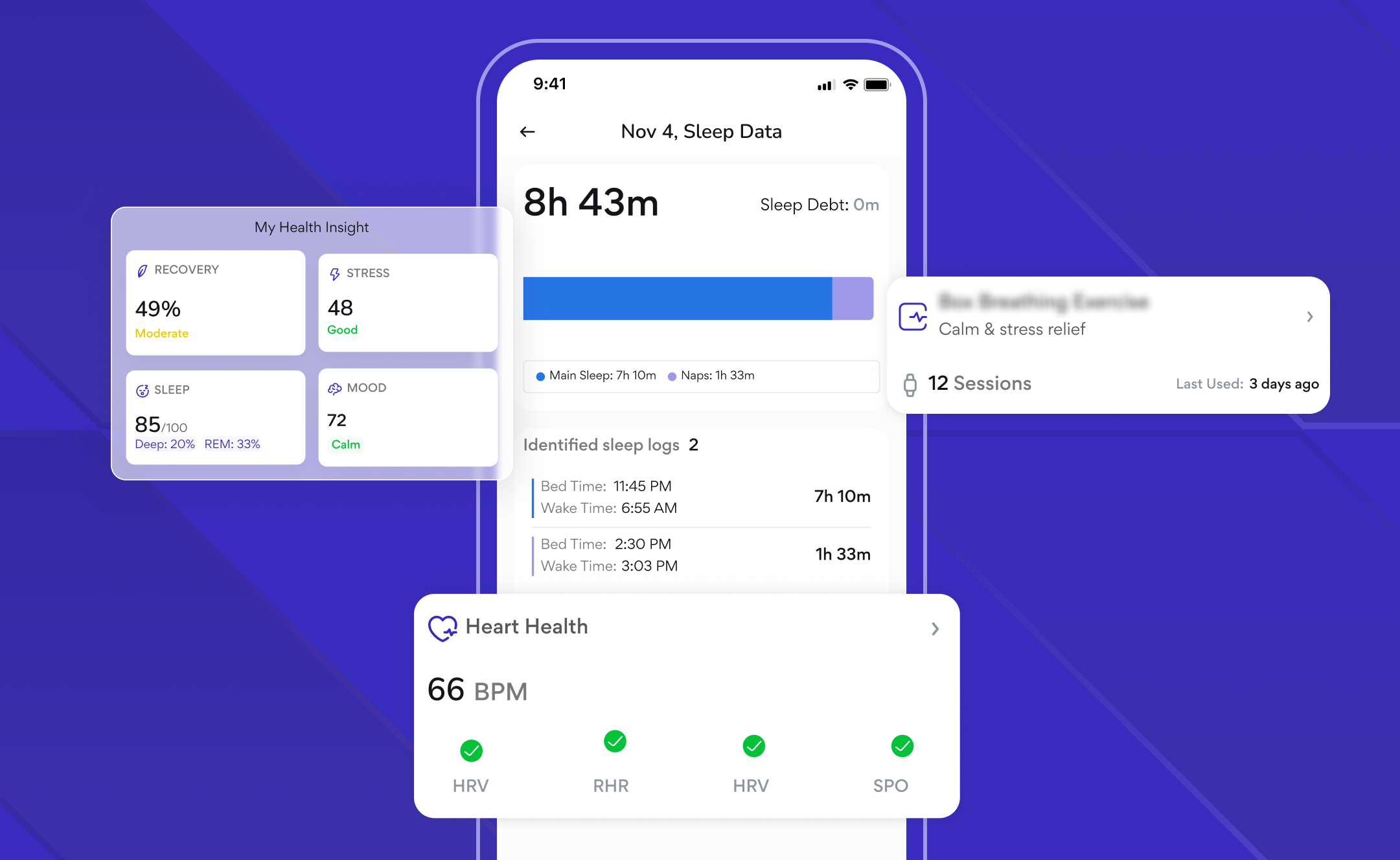
5. Mind–Body Data Integration

To deepen insights:

  • Designed systems that integrate external health data (e.g., sleep, activity)
  • Created visual relationships between physical and emotional states
  • Used progressive disclosure to avoid overwhelming users

Key Idea:
Help users see connections they wouldn’t naturally notice.
4. Insight & Reflection System

Raw journaling data has limited value without interpretation.

I addressed this by:

  • Designing AI-generated pattern recognition summaries
  • Structuring insights into clear, digestible formats
  • Connecting emotional patterns with behavioral signals

Focus:
Turning reflection into self-awareness users can act on.

6. Feedback Loops & Habit Reinforcement

Sustained engagement required more than reminders.

I implemented:

  • Subtle nudges based on behavior patterns
  • Progress indicators tied to consistency and reflection depth
  • Emotionally intelligent feedback, not generic notifications

7. Real-Time UX & System Responsiveness

AI-driven interactions required careful handling of delays:
  • Designed feedback states for processing and response generation
  • Used micro-interactions to maintain engagement during wait times
  • Collaborated with engineering to ensure low-latency response perception

Key Design Principles Applied

  • Consistency over intensity — build habits, not bursts
  • Guidance over control — support, don’t dictate
  • Reflection over logging — prioritize meaning, not volume
  • Empathy over automation — humanize AI interactions

No items found.

Outcomes (Testing Phase)

  • Improved journaling consistency through behavior-driven systems
  • Increased engagement with AI-assisted reflection flows
  • Enhanced user perception of personalization and relevance
  • Established scalable patterns for AI-driven wellness features

Other Projects